The Search Era Is Over
Search a competitor’s pricing page, summarize a 40-page PDF, cross-reference three Salesforce reports, then draft a brief — Perplexity wants one sentence from you and the rest handled by a machine. That is the pitch behind Perplexity Computer, the platform the company quietly rebuilt from an answer engine into a full autonomous agent suite that orchestrates 20 frontier models across desktop, mobile, and enterprise tiers.
The release matters because it marks a clean break from the chatbot pattern that defined the last two years of AI tools. Where ChatGPT, Claude, and Gemini all started as boxes you typed into, Perplexity Computer is built around persistent agents that take multi-step actions — touching your local files, your CRM, your data warehouse, and your browser in a single workflow. The company also shipped four new APIs (Search, Agent, Embeddings, Sandbox) that give developers the same infrastructure powering the consumer product.
This is the shape of the post-search era. The question for operators is no longer “which model is smartest” but “which platform actually closes the loop from intent to outcome.”
What Perplexity Computer Actually Ships
The Personal Computer (Desktop + Mobile)
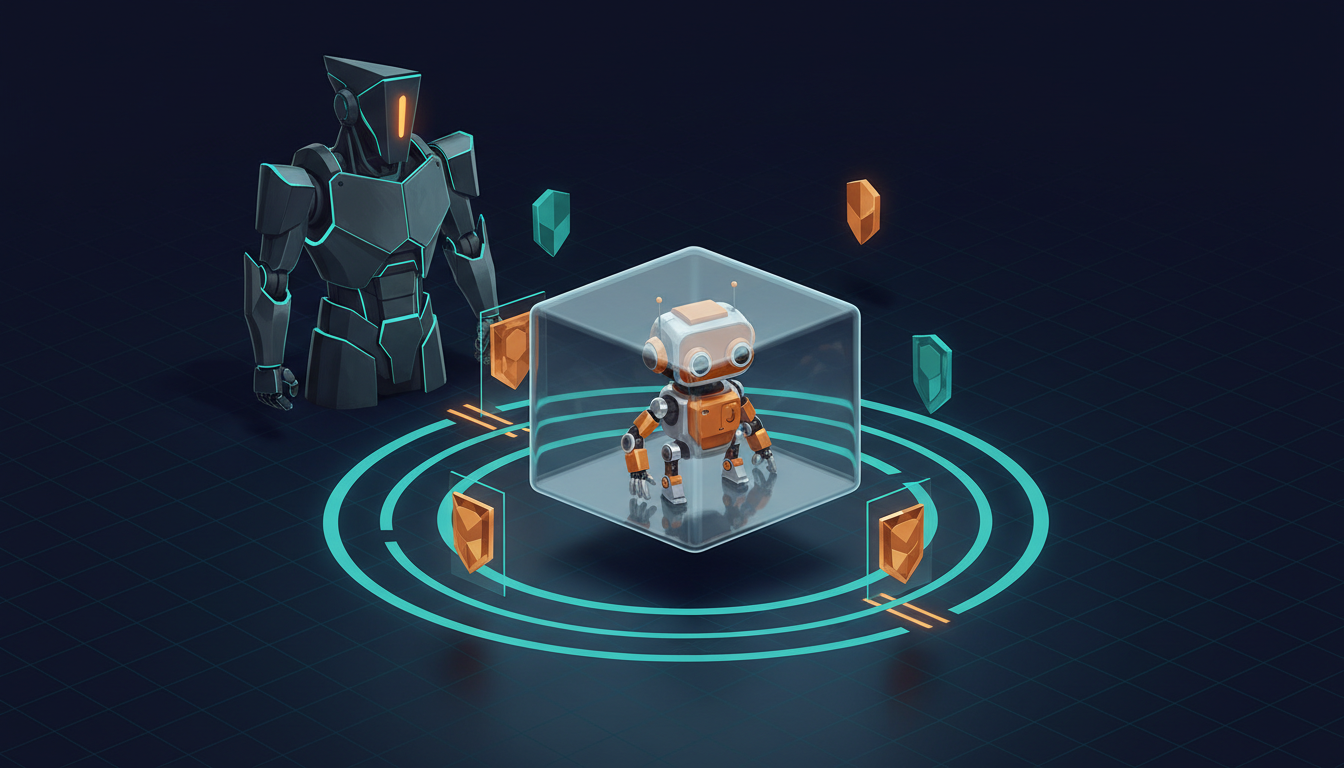
The flagship tier runs on dedicated Mac Mini hardware — a physical device you own rather than a cloud session you rent. That matters for two reasons: it can read your local files and apps without round-tripping through a server, and every action is logged with an audit trail plus a kill-switch you control. If you have ever watched an agent go off the rails inside a sandbox, the kill switch is the feature that actually lets you sleep.
The mobile companion mirrors the workflow on iOS and Android, so a research thread you start on the train continues on your desktop without the usual context loss.
Computer for Enterprise
This is where the story gets serious. Computer for Enterprise connects directly to Snowflake, Salesforce, and the rest of your data stack, letting an agent pull live revenue numbers, cross-reference them with public filings, and produce a written brief — all without you copy-pasting between tabs. The enterprise tier also adds role-based access controls and compliance hooks that consumer tools simply do not have.
Comet Enterprise (AI-Native Browser)
Comet is Perplexity’s AI-native browser, now in enterprise form with CrowdStrike security integration baked in. The pitch: instead of bolting an AI sidebar onto Chrome, Comet treats every page as an object the agent can read, summarize, fill, or act on. For sales teams doing prospecting, or analysts doing competitive intel, this collapses the “open 30 tabs, copy text into a doc” workflow into a single command.
Four New APIs
The APIs are the sleeper story. Search, Agent, Embeddings, and Sandbox expose the same engine that powers Perplexity Computer to any developer. If you are building internal tooling, you can now route a query through Perplexity’s multi-model orchestration layer instead of stitching together OpenAI, Anthropic, and Google calls yourself. The Sandbox API in particular is interesting — it gives agents a safe execution environment for code and browser actions, which has been one of the hardest pieces to get right in DIY agent stacks.
How It Stacks Up Against the Competition
The autonomous agent space got crowded in a hurry. Here is where Perplexity Computer lands relative to the other major players as of mid-2026.
- ChatGPT Work (OpenAI) — Strong on reasoning depth and coding tasks; weaker on multi-tool orchestration and enterprise data integrations. Best for individual knowledge workers who live inside one conversation.
- Meta Business Agent Platform — Deep in WhatsApp and Instagram workflows; narrow outside the Meta ecosystem. Best if your customer interaction layer is Meta-native.
- Microsoft Frontier Company / Copilot — Unbeatable inside the Microsoft 365 stack (Excel, Teams, SharePoint); feels heavy outside it. Best for enterprises already locked into Microsoft licensing.
- Google Gemini Enterprise — Wins on multimodal (video, audio, images) and Workspace integration; the agent layer is still maturing. Best for organizations that run on Google.
- Perplexity Computer — Best-in-class for live web research and multi-step workflows that span local files, SaaS apps, and the open web. The 20-model orchestration means it can route each subtask to the model best suited for it, rather than forcing one model to do everything.
The honest takeaway: none of these platforms wins on every axis. The right pick depends on where your work actually lives. If your workflow is research-heavy and spans external data sources — competitive analysis, market mapping, due diligence — Perplexity Computer is the most complete offering right now.
The Shift From Chatbots to Agents (and Why It Matters)
The original chatbot pattern was a single-turn question machine: you ask, it answers, you ask again. That pattern broke down the moment tasks started requiring state, tools, and persistence — three things a 2023-era chat window could not give you.
Perplexity Computer represents the third generation of this shift:
- Generation 1 (2022–2023): Chatbots. Single model, single turn, no tools.
- Generation 2 (2024–2025): Tool-using assistants. One model plus a handful of integrations (browsing, code execution, file upload).
- Generation 3 (2026): Multi-model agents. A routing layer that picks the right model per subtask, executes multi-step plans, and operates across local and cloud environments with audit trails.
The reason Generation 3 changes the economics: agents convert intent into output at near-zero marginal cost. A research brief that used to take an analyst a full day now runs in the background while you grab coffee. The bottleneck is no longer the model — it is whether you trust the agent enough to hand it the keys. That is why Perplexity’s emphasis on the audit trail and kill switch is not a nice-to-have. It is the trust layer that makes autonomous agents deployable inside real organizations.
What to Do Now
Whether or not Perplexity Computer is the right pick for you, the autonomous agent category is now production-ready. Here is a practical checklist for the next 30 days.
- Audit one recurring workflow. Pick a task you do weekly — competitive scan, customer research, report drafting — and map out every step. Most “AI projects” fail because teams skip this and jump straight to tool selection.
- Pilot one agent platform on that workflow. If you are research-heavy, try Perplexity Computer. If you live in Office, try Copilot. The point is to pick one, run it for two weeks, and measure time saved.
- Set the trust boundaries first. Before you let any agent touch real data, decide what it can read, what it can write, and what requires human sign-off. Write it down. This is your kill-switch policy.
- Watch the routing layer, not the model. The 2026 story is no longer “GPT vs Claude vs Gemini.” It is which orchestration layer routes subtasks to the right model fastest. Perplexity’s 20-model approach is one answer; expect every major player to ship something similar by year-end.
- Re-skill around agentic workflows. The skills that compound in an agent-rich world are problem decomposition, prompt design for multi-step tasks, and evaluation — knowing how to tell whether an agent’s output is actually correct. These are the new table stakes.
The bigger picture: the tooling layer of AI is consolidating around platforms that own the full intent-to-outcome loop. Perplexity Computer is a serious bid for the research-and-analysis segment of that market. The platforms that win will be the ones that combine multi-model routing, real integrations, and a trust layer you can actually defend to your security team. Everything else is a chatbot with better branding.